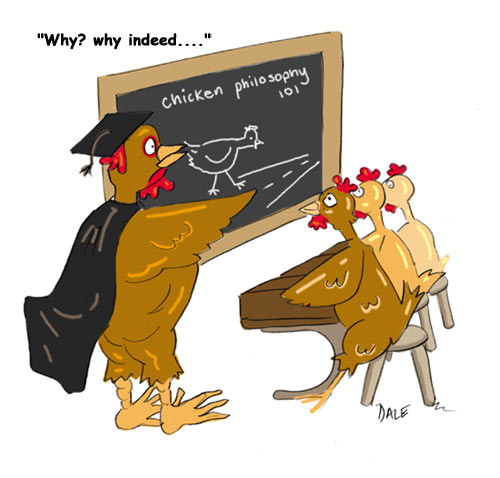
Science or Religion?
Is there only one reliable way of knowing things - science? What about religion – is it just a big fantasy? And what about artistic expression - music, literature, art - are these of any value? The real question here is how can we know which of these is better - which is more true? Which is no more than the fancy of our imagination and just down right unreliable?
What's so important about asking these questions? Why can we not just leave it to the theologians and scientists to fight it out between them? The answers affect all of our lives. They are about who has power in society and who should have that power. They are about what we teach our children in schools and where do we tell them to look for the answers to what is important in life. The answers are about how we address real life issues such as contraception, abortion, euthanasia, human cloning, rights over human embryos but to mention a few. Ask the scientist or the theologian what is going on and you’ll get very different answers. There's a lot at stake in this debate and it is hard for most of us to not have strong opinions on the issues.
The bottom line here is when we ask fundamental questions of each of these ways of engaging with the world, each will ultimately fail to answer all of our questions in entirety.
You see, even if science can measure every physical event in the universe, can it really capture what it means to be human? All religions will tell us how to live our lives, but isn't it just nonsensical for a theologian to explain scientific processes such as evolution?
A key problem with the history of human knowing is that we have continuously made claims for particular branches of learning (science, theology, philosophy etc) that cannot be substantiated. “There is only one source of truth – religion” or “science will ultimately explain everything that matters” and so on. Where has this brought us? Galilleo. The Spanish Inquisition. The Atomic Bomb. Chemical Warfare.
At the end of the day each branch of knowing has a limited terms of reference. Each has a set of questions that it is equipped to answer. Science will ask how things work and find answers by observing and measuring everything in the universe that we can possible observe and measure. Religion asks why we are here and finds the answers by addressing the questions to a higher being - God.
When a scientist, a theologian, an artist or a philosopher asks "where did we come from?" the question sounds the same but they are in fact asking very different questions. The scientist is asking through what natural biological events have we arrived at our current state? The theologian is asking what was God's intention in putting us here and to where are we returning when we are finished here? The artist is asking what the significance of our being is in this time and place. The philosopher is asking what it means to be human. Different questions answered in very different ways.
Conflicts between various forms of knowing are often less about a genuine search for truth, than about the preservation of the social, political and economic power that is assumed by those who claim to have a monopoly on truth. The pagan high priests and witch doctors of old yielded the same or greater relative power over people's lives as the research focused pharmaceutical companies of the modern world do. Power very often comes from having knowledge that is perceived by others as being valuable - whether it be knowledge of how to gain eternal life or how to cure a chronic illness.
In a genuine search for the truth about the human condition and our world there are a couple of things to keep in mind. The first might be (to put it bluntly) 'mind your own business' - concern yourself with the questions that you are equipped to answer. Don't ask the scientists to tell us how we should live. A scientist will tell you what you can do, not what you should do. Don't ask the theologian to tell you whether the world is flat or not. Instead ask him whether we should make a better effort at protecting it from human destruction.
The second thing to keep in mind is that a genuine search for truth will always seek more understanding - will always try to step outside what we already know. In this way we hope to come closer the real truth. Our knowing is always human knowing, so our grasp of truth will always be in human terms. Fundamentally this is the best we can really hope for. Ultimate truth, whether it be scientific, religious, artistic or philosophical is always one step beyond us. We never seem to have a clear and lasting grasp of truth - just human interpretations, theories, and analogies. Our hope is that as our understanding grows we do come closer to real truth.
There is an ultimate inevitability about human ignorance but this doesn't stop us from continuing the quest for truth.
Be careful of those who tell you they have a monopoly on truth – think first what agenda lies beneath that claim. None of us in fact have a complete handle on truth – whether it be the learned theologian or the expert scientist. There may well be absolutes out there but all we can ever have are human theories on what those absolutes might look like.
What's so important about asking these questions? Why can we not just leave it to the theologians and scientists to fight it out between them? The answers affect all of our lives. They are about who has power in society and who should have that power. They are about what we teach our children in schools and where do we tell them to look for the answers to what is important in life. The answers are about how we address real life issues such as contraception, abortion, euthanasia, human cloning, rights over human embryos but to mention a few. Ask the scientist or the theologian what is going on and you’ll get very different answers. There's a lot at stake in this debate and it is hard for most of us to not have strong opinions on the issues.
The bottom line here is when we ask fundamental questions of each of these ways of engaging with the world, each will ultimately fail to answer all of our questions in entirety.
You see, even if science can measure every physical event in the universe, can it really capture what it means to be human? All religions will tell us how to live our lives, but isn't it just nonsensical for a theologian to explain scientific processes such as evolution?
A key problem with the history of human knowing is that we have continuously made claims for particular branches of learning (science, theology, philosophy etc) that cannot be substantiated. “There is only one source of truth – religion” or “science will ultimately explain everything that matters” and so on. Where has this brought us? Galilleo. The Spanish Inquisition. The Atomic Bomb. Chemical Warfare.
At the end of the day each branch of knowing has a limited terms of reference. Each has a set of questions that it is equipped to answer. Science will ask how things work and find answers by observing and measuring everything in the universe that we can possible observe and measure. Religion asks why we are here and finds the answers by addressing the questions to a higher being - God.
When a scientist, a theologian, an artist or a philosopher asks "where did we come from?" the question sounds the same but they are in fact asking very different questions. The scientist is asking through what natural biological events have we arrived at our current state? The theologian is asking what was God's intention in putting us here and to where are we returning when we are finished here? The artist is asking what the significance of our being is in this time and place. The philosopher is asking what it means to be human. Different questions answered in very different ways.
Conflicts between various forms of knowing are often less about a genuine search for truth, than about the preservation of the social, political and economic power that is assumed by those who claim to have a monopoly on truth. The pagan high priests and witch doctors of old yielded the same or greater relative power over people's lives as the research focused pharmaceutical companies of the modern world do. Power very often comes from having knowledge that is perceived by others as being valuable - whether it be knowledge of how to gain eternal life or how to cure a chronic illness.
In a genuine search for the truth about the human condition and our world there are a couple of things to keep in mind. The first might be (to put it bluntly) 'mind your own business' - concern yourself with the questions that you are equipped to answer. Don't ask the scientists to tell us how we should live. A scientist will tell you what you can do, not what you should do. Don't ask the theologian to tell you whether the world is flat or not. Instead ask him whether we should make a better effort at protecting it from human destruction.
The second thing to keep in mind is that a genuine search for truth will always seek more understanding - will always try to step outside what we already know. In this way we hope to come closer the real truth. Our knowing is always human knowing, so our grasp of truth will always be in human terms. Fundamentally this is the best we can really hope for. Ultimate truth, whether it be scientific, religious, artistic or philosophical is always one step beyond us. We never seem to have a clear and lasting grasp of truth - just human interpretations, theories, and analogies. Our hope is that as our understanding grows we do come closer to real truth.
There is an ultimate inevitability about human ignorance but this doesn't stop us from continuing the quest for truth.
Be careful of those who tell you they have a monopoly on truth – think first what agenda lies beneath that claim. None of us in fact have a complete handle on truth – whether it be the learned theologian or the expert scientist. There may well be absolutes out there but all we can ever have are human theories on what those absolutes might look like.
posted by De Man on de Street at 8:20 pm
0 comments